
sahil mroke
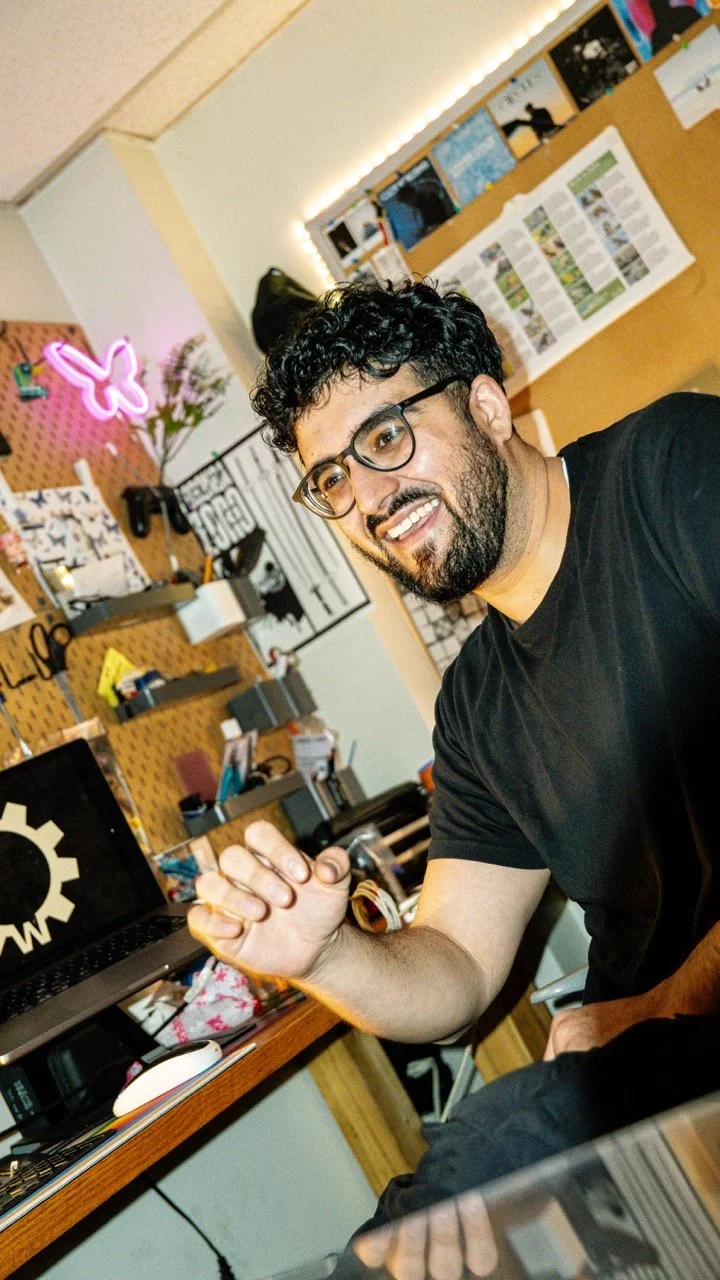
Sahil Mroke (he/him) is an artist, designer, researcher, educator, and producer working all around Lower Mainland. He runs Motorway Studio, with a practice centered on community-oriented production, curation, and collaborations. He holds a BDes. COMD (2020) and an MDes (2024) from ECU, and has been involved on-campus as part of the design faculty.
interview + photographs by anne seol + malvika garlyal // edited by abi simatupang
———
Let’s start simple–who are you? What's your practice?
Hello, my name is Sahil. I am an artist, designer, researcher, educator, producer operating all around the Lower Mainland of Vancouver, BC. My practice involves a lot of collaboration, community-oriented production and curation. I work a lot in the event space—with a non-profit—and focuses on curating festivals and community programming throughout the year. I run a studio in Delta and we try to offer farm-to-table ideas to install for all kinds of creative production: from culinary practice, to event design, to branding, or any form of marketing. The practice is very widespread and we like to engage with all kinds of media—digital or physical,such as publication design.
Um, I am an OG at Emily Carr going on ten years. I have a bachelor's in communication design, and then also a master's in design focusing on interdisciplinary design. Um ... what else? I make a mean apple pie. Oh yeah.
Ten years! That's a long time. Are there any projects from ECU that you still remember, or ones that shaped the way you design now?
I think there's a couple of projects I really remember. One of the big ones was the third year’s communication design core. Alex Haas's class. It was a project where we were interpreting music visually. Fire project; my submission was Ella Fitzgerald’s The Way You Look Tonight. I made a poster that overlaid all 80 artists who have covered that song over the last 100 years. And then, I cut the song so that each of them would say one word in the order of the song. So you had a visual poster that showed every cover and every rendition of the artist, and then an audio experience that was very weird, but literally was jazz, rock, blues, country.
It was a lot of work, but I think that one was one of those projects where ... Okay, bear with me—when you get those fluffy ass projects that's like ... when you see art and you're like, "Well, then what?” But I also am now one of those people who completely understands every type of fine arts. I think I can remove myself from reality to be in yours and understand your perspective. And I think that's what that project taught me. It's about being able to get other people's work, to be a visitor in everyone's world and culture.
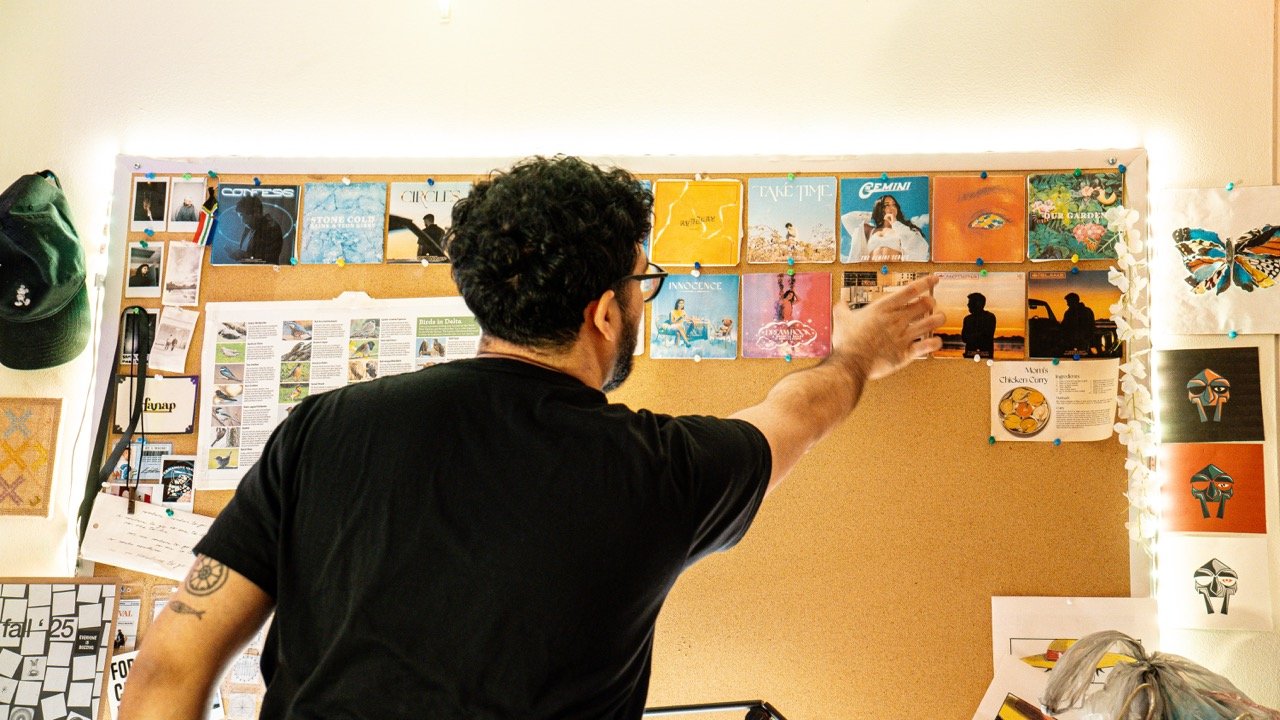
That's such a massive part about my life, not even just my work. I want to be a visitor in cultures because there's just more ways to see, live, eat, play; create like, food, music and art. Those are, I feel like, are my trifecta of any kind of programming, which is hilarious. Even our launch party, we were boiling a bucket of corn while people were walking through the studio listening to a DJ looking at art.
I think I had a very privileged undergrad experience. I look back on it more fondly now; I almost dropped out because I was just depressed—I was sad, lonely, and I wasn't making friends. And I was commuting about two hours to get on campus; A bus to the train, a train to downtown, a bus to Granville Island, then a walk to Granville Island. It was pretty brutal back then. But I do think once I found friends, I was like, “Oh, I'm fine.” It's so phenomenal. You know, graduating into Covid was wild. And also switching campuses. That was interesting.
Where did future, post-undergrad Sahil landed on next?
From there ... I do my own work, charge my hours, get my check, And that concoction of things will be its practice of its own. That paints the picture of what Motorway is next. Because in my mind, it's still the farm-to-table for creative production. However, I also recognize that I'm really good at research, consultation, and collaboration. Producing team management, project management. That in itself is a whole other ball game.
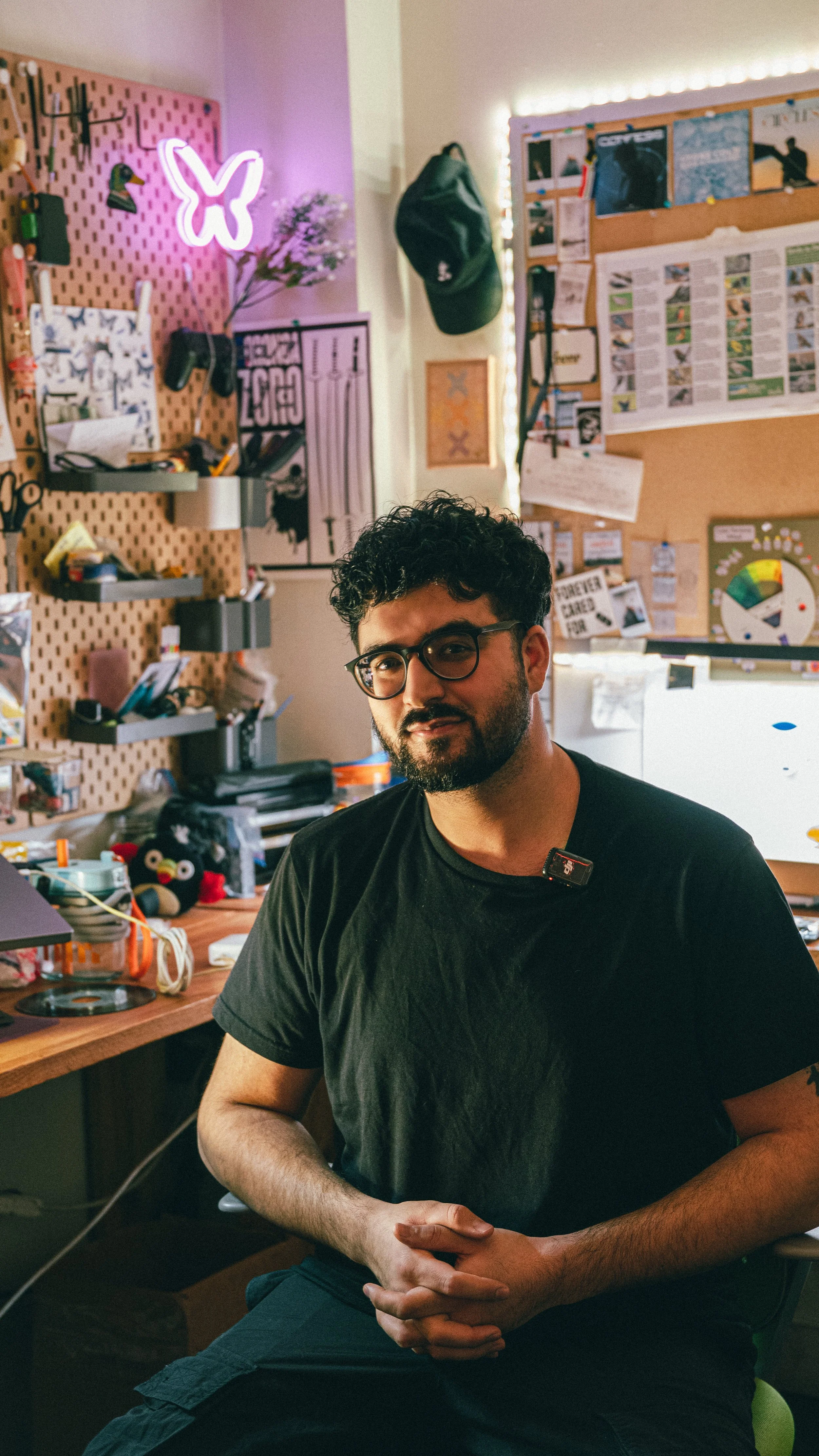
Right on post-COVID, I got really good at being alone. I started collaborating because I was so self-conscious. And then I realized, “Oh, I need to learn to be by myself.” COVID taught me that to be at peace without the need for social interaction and all that. It was kind of a blessing for myself in that it really changed how I see the work and where I'm going with it. And then the masters–naturally–kicked my ass and opened my head up to the world. And now I feel like ... once you’re deep in design, you’ll be like, “Oh, I see it everywhere,” almost annoyingly. My entire YouTube recommended feed is geopolitical content from around the world. Then I wanna chill, but I’ll go to bed thinking about the infrastructure in Africa. From there—I wholeheartedly recommend this, it's going to be the most important thing—reflect on every experience you're having right now, take a minute to write it. When I think about my undergrad, it would have been nice to at least try to explain and understand it from a creative standpoint because ... all of this affects all of that, right? So once you understand how this works, you'll be like, “Oh shit, I'm good.”
Wise words. Are there any other advice you’d like to impart on folks who are starting their design journey?
Understand your self as a person before a designer—all the things you like, all the things you don't like, the way that you are, your culture, upbringing ... I think if you're able to map yourself as a person, it helps you map yourself as a creative individual. I think people, everyone needs to realize that they have a creativity inside them that is unique to them, that they just need to understand to make sure it's at its most powerful. And I think “communication design,” “interaction design,” “industrial design”—horrible titles, when in reality what we're doing is so much more than that.
Another thing: for instance, there are times where you’re not going to be able to think. In undergrad, you’d always feel guilty about it, be mad at yourself, when in reality you’ll learn that you got to put your hands up and come back to it later, and it's going to get figured out.
You just have to. You have to trust that if you give yourself the break, you'll always be able to come back and figure it out.